Menu clarity
Guests can switch between meal periods without downloading a PDF.
CASE STUDY / RESTAURANT
A fictional restaurant concept built around the questions a guest usually has first: what is on the menu, can I get a table, and how do I plan a larger event?
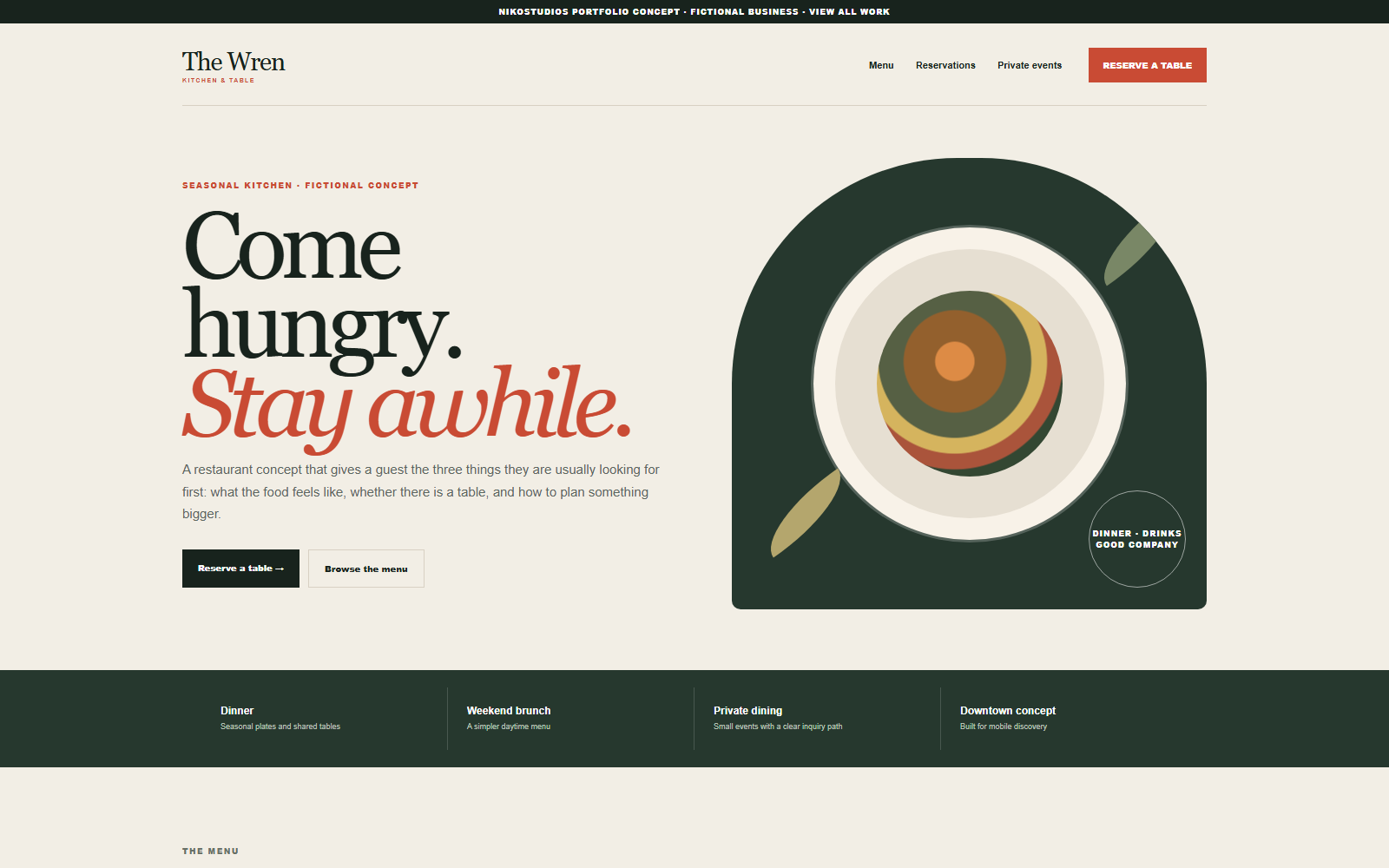
TAKE IT FOR A TEST RUN
The demo does not send a real reservation. It shows the customer path a production build could connect to the restaurant's existing booking platform.
THE CHALLENGE
A guest may arrive from Google or Instagram and want only a menu, a table, hours, or private-event information.
The concept keeps those high-intent actions visible without flattening the restaurant's personality.
THE SYSTEM
Menu discovery and table selection stay lightweight. Private dining has its own path because the restaurant needs different information before responding.
A production version could connect to Resy, OpenTable, Toast or an existing booking and inquiry system.
WHAT THE CONCEPT DEMONSTRATES
The visual direction supports the brand while each key interaction maps to a real restaurant workflow.
Guests can switch between meal periods without downloading a PDF.
Party size and time are easy to select from a phone.
Private dining is separated from a normal table request.
The first screen answers the questions that matter from search and social traffic.
Editorial typography and warm color carry the hospitality feel without hiding utility.
The website can sit in front of the booking tools the restaurant already uses.
TRANSPARENCY
The Wren Kitchen is fictional. The menu, pricing, reservation times and business details are sample content.
Share the current site or booking flow. We can look at where menu, reservation and event inquiries could be simpler.